Design idea
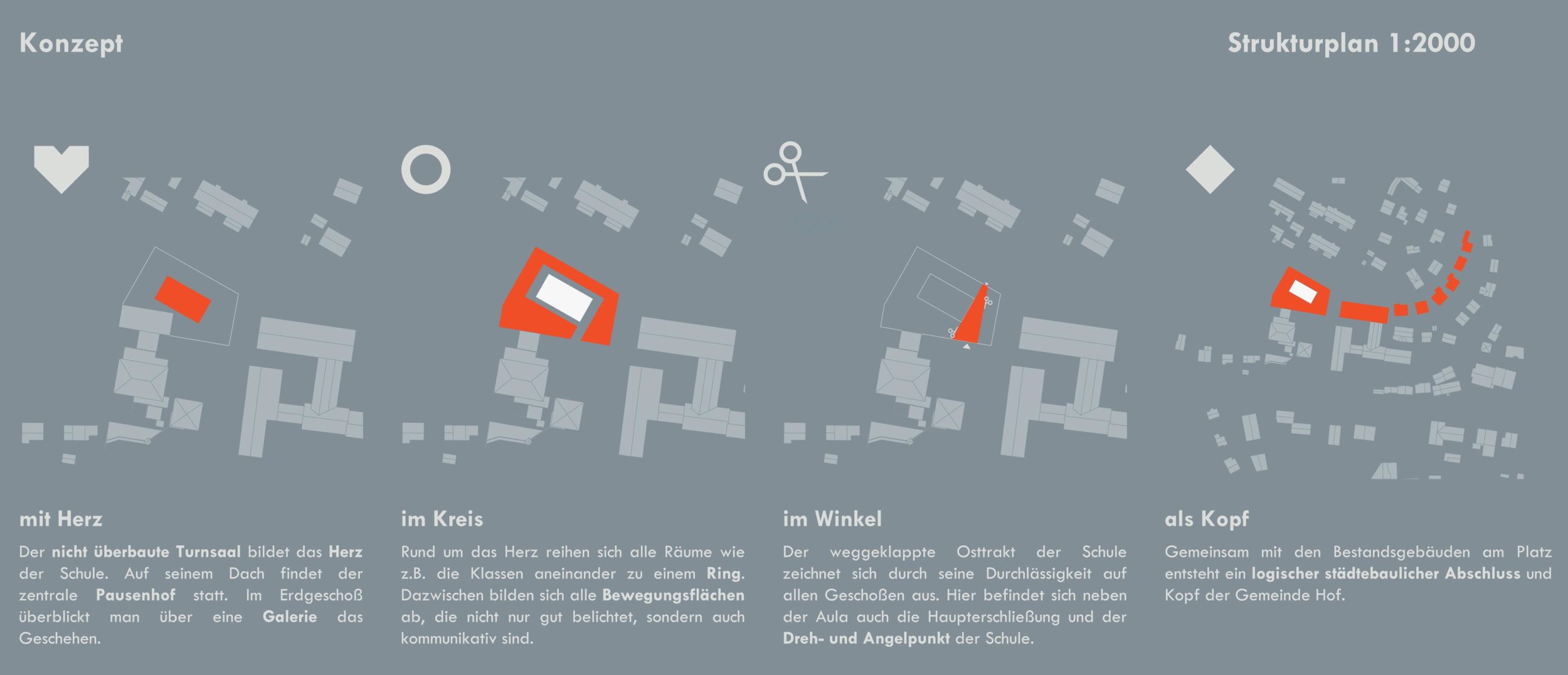
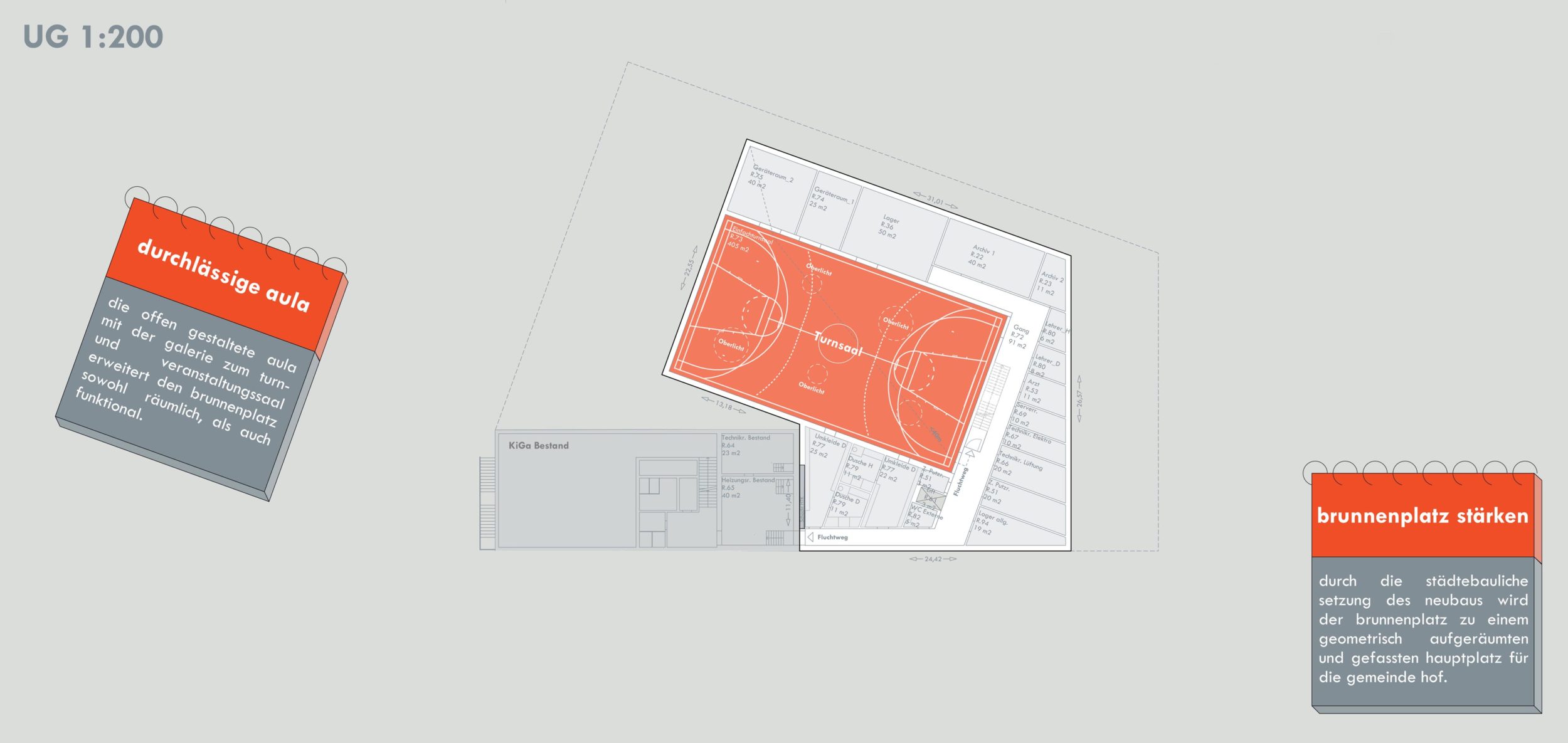
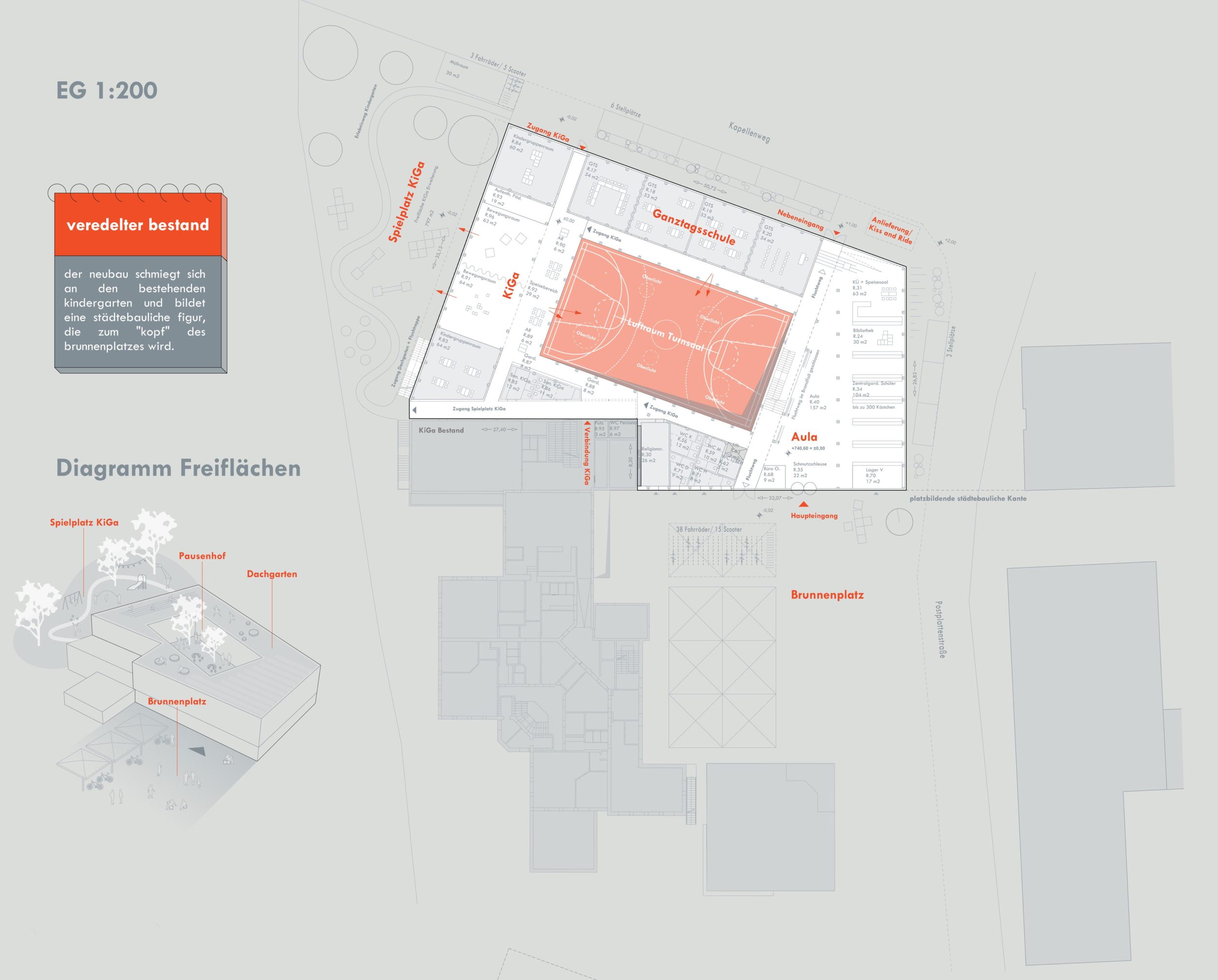
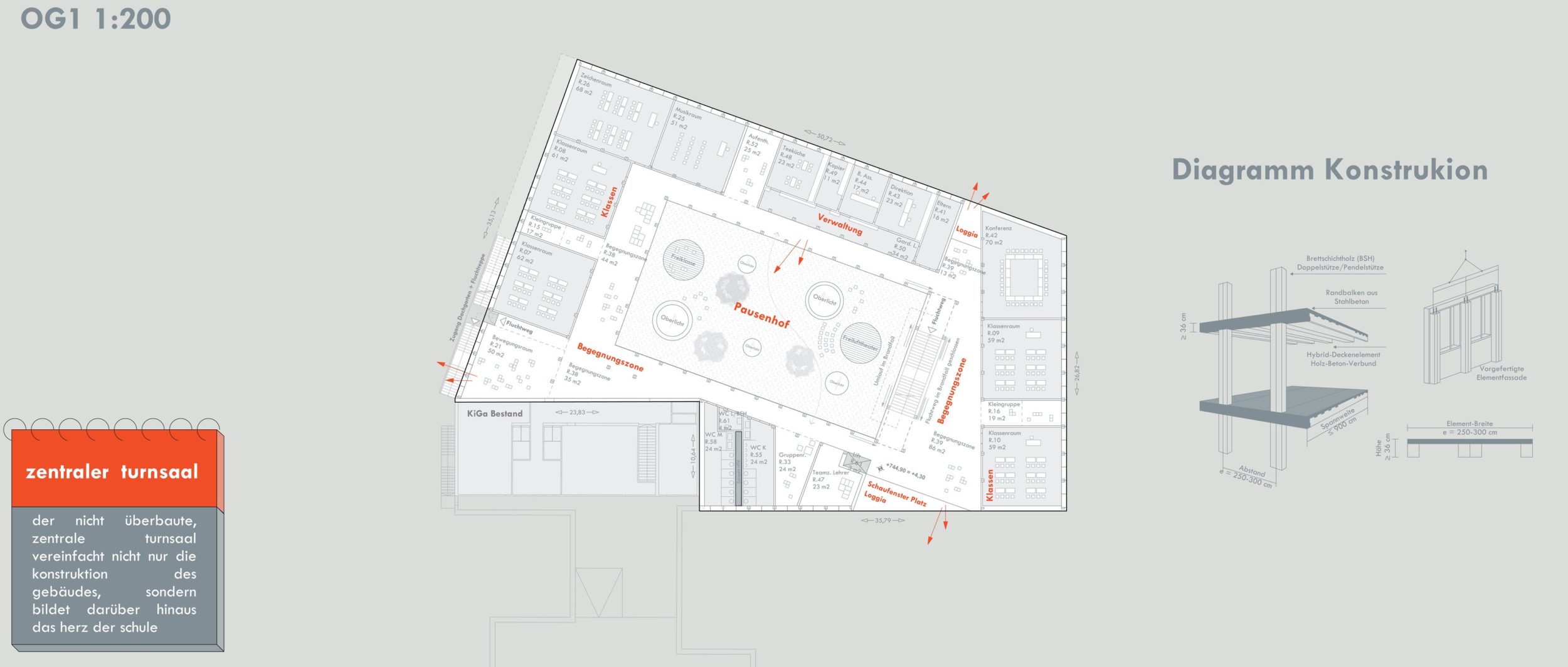
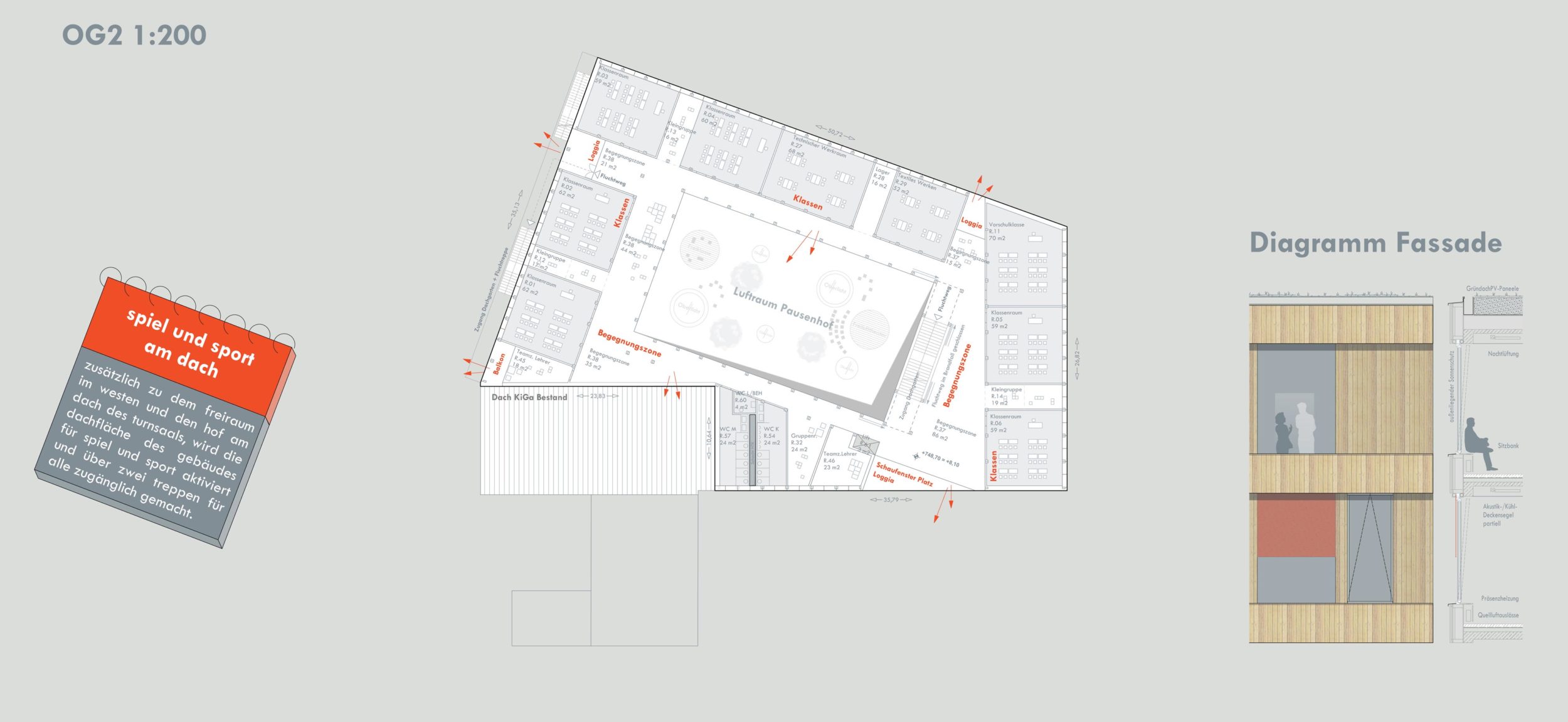
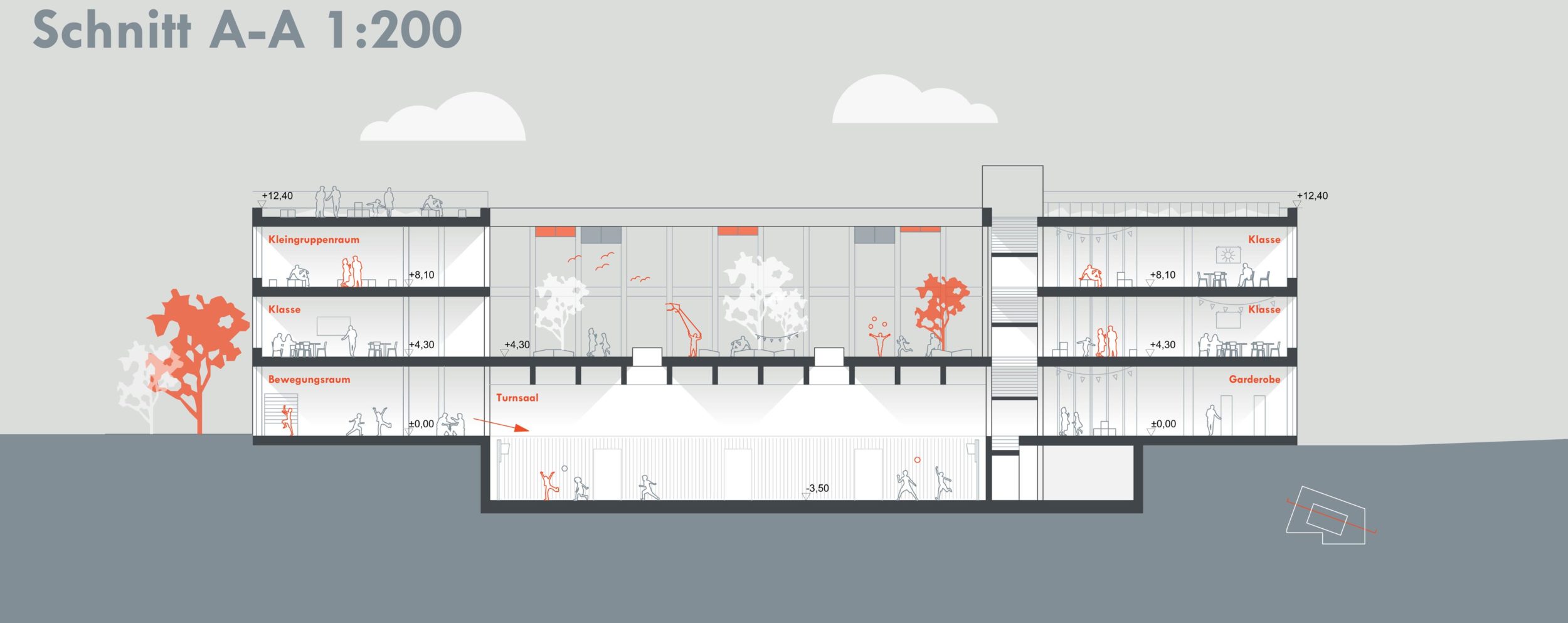
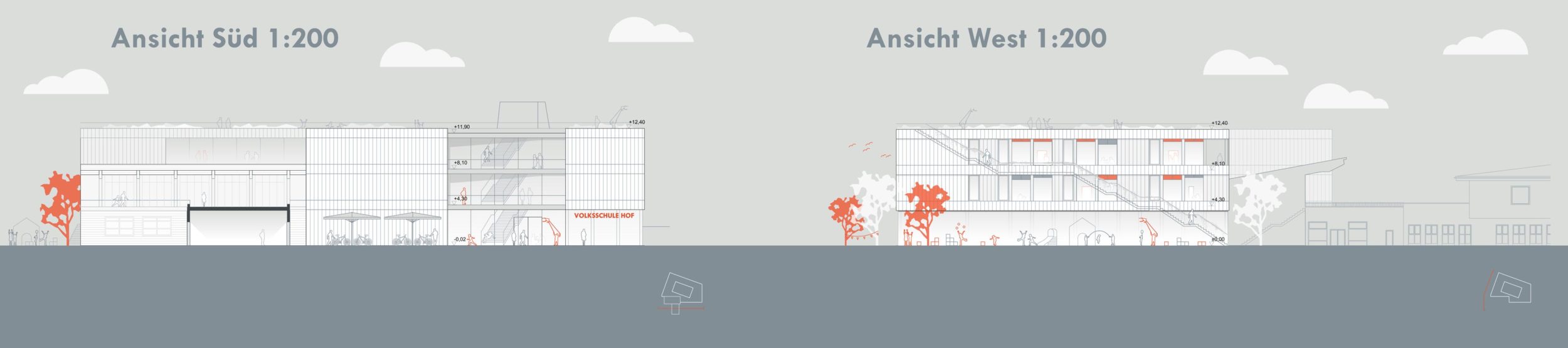
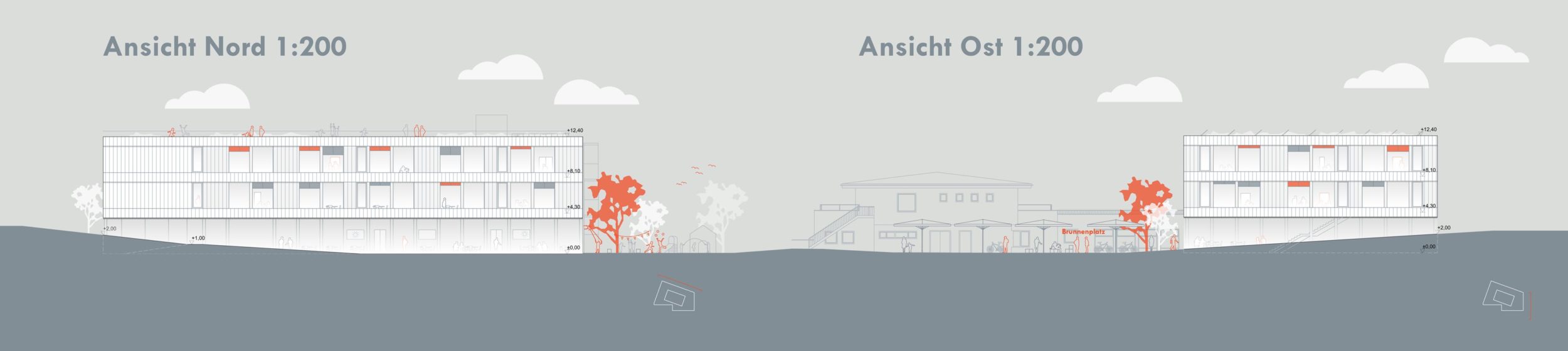
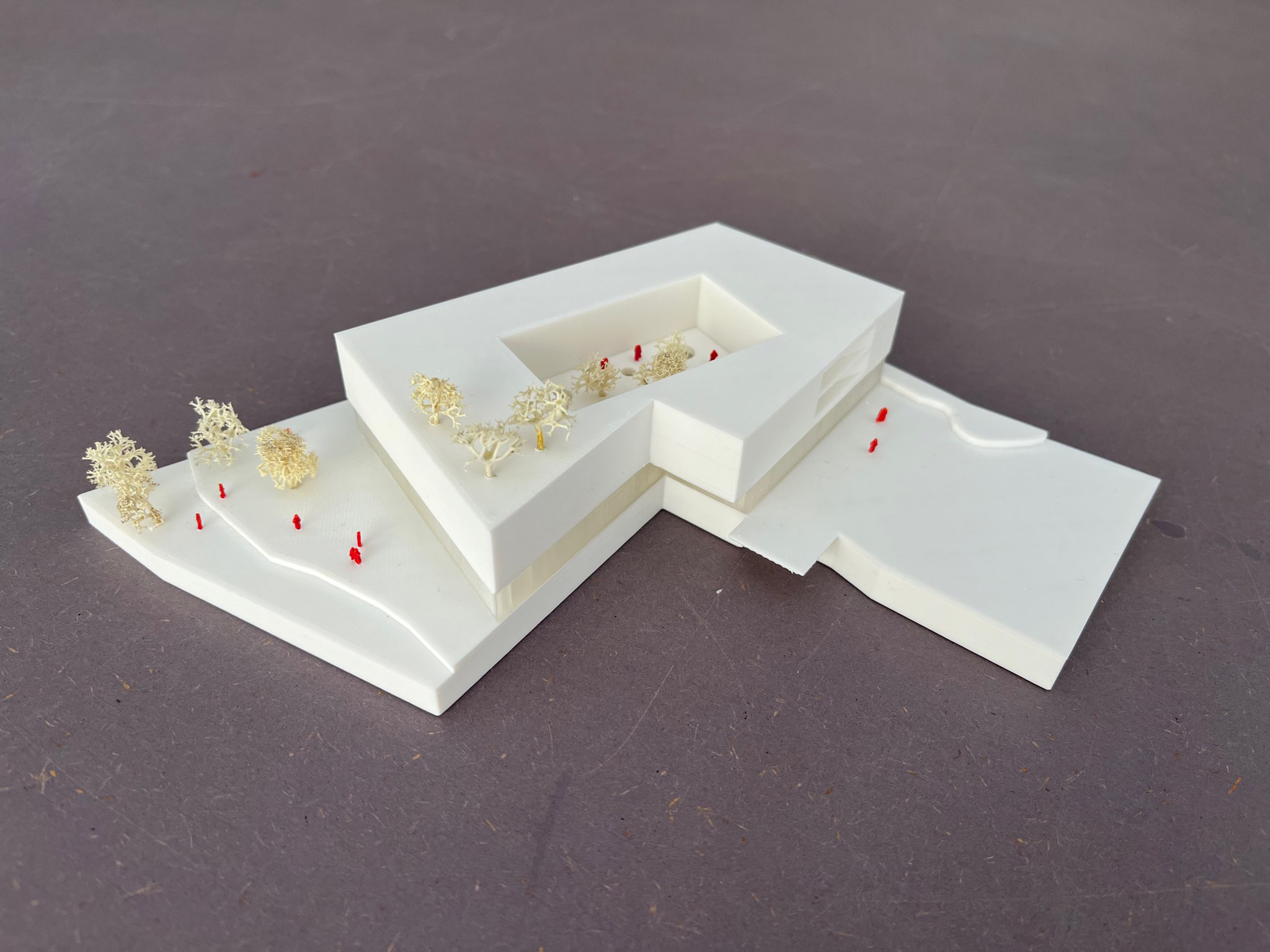
A gym without anything built over it, with the playground on its roof, forms the heart and centre of the school. All rooms are arranged around this centre, creating generous, open areas that are pleasant to spend time in. On the ground floor, too – which holds all semi-public rooms such as the library, dining hall and cloakroom, as well as the all-day school right next to the kindergarten – a view down into the gym one floor below invites community and events.
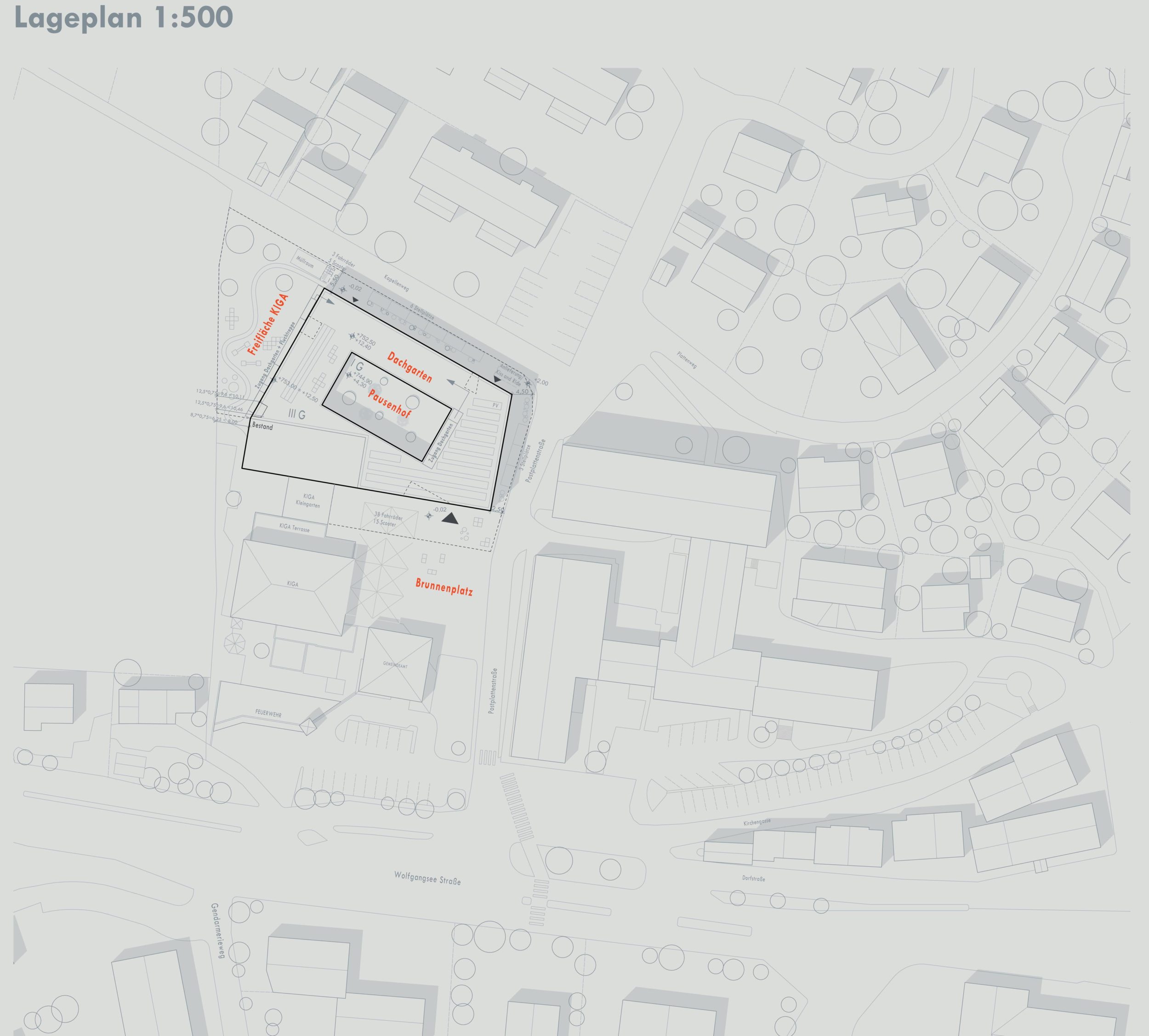
The four clearly structured outdoor areas – an open space for the kindergarten in the west, the playground on the gym roof, the green school roof and the main square – not only offer safe, generous outdoor areas for children but also allow different groups to use them at the same time.
Colour and material concept
A vertical timber façade with generous glazing and textile sun protection forms the building's outer skin. Inside, too, the focus is on recycled and recyclable as well as natural materials such as clay, wood and mineral building materials.
Construction method
Most of the school can be built using prefabricated elements. The main primary structure, a timber–concrete composite system, can be delivered to site prefabricated, which can reduce construction time and costs.
Structural concept
Using a timber–concrete composite system (e.g. Cree), a ring of prefabricated elements is placed ecologically and economically on a reinforced-concrete structure prepared on site. To create larger column-free spans, glulam beams are used in areas such as the assembly hall and gym.
Building services concept
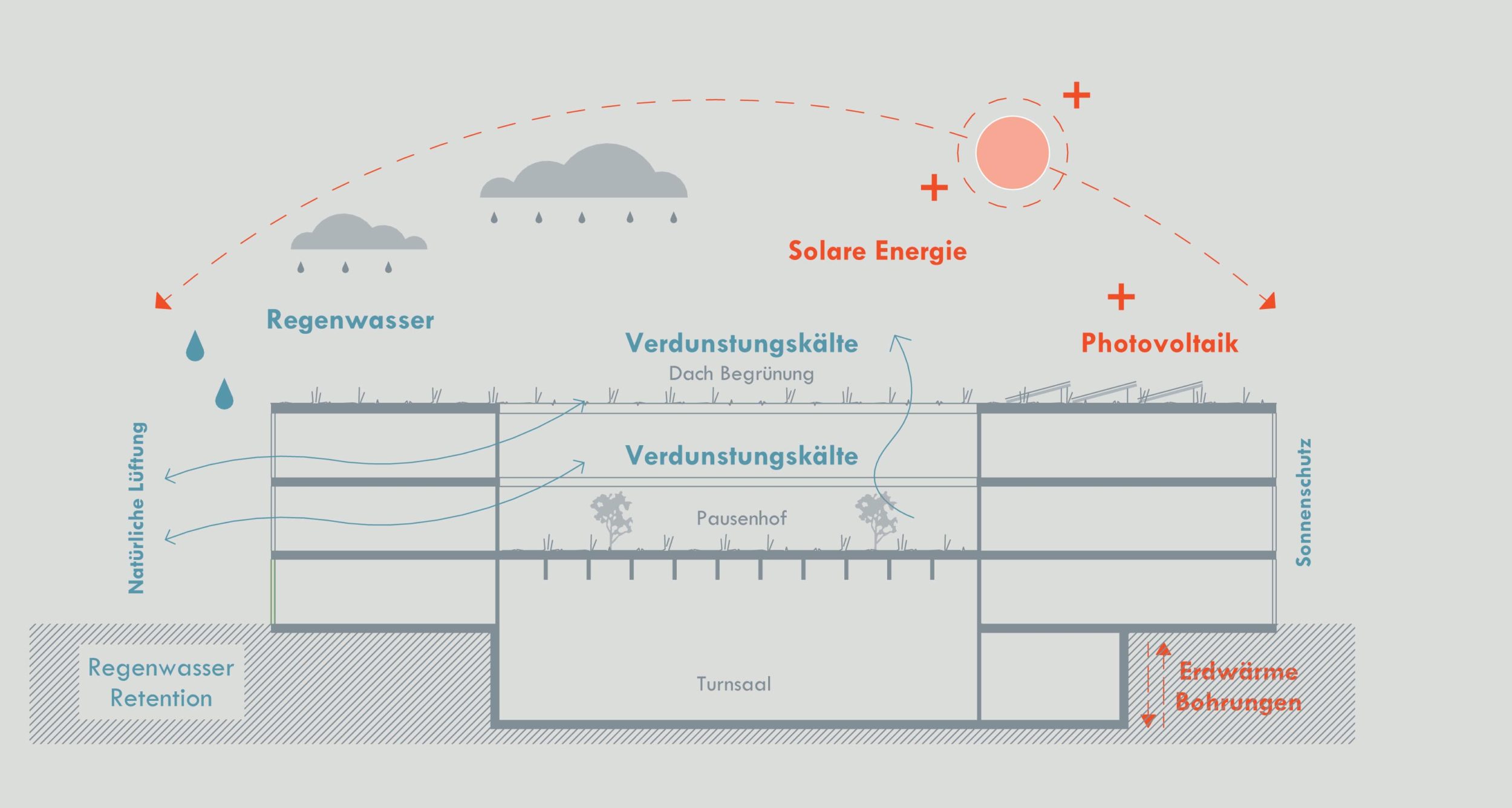
A water-storing retention roof not only reduces the amount of water the building has to discharge but also provides evaporative cooling for the local microclimate at the school, the open spaces and the square. Controlled night ventilation via the shared centre also has a positive effect on the building's energy balance and climate resilience. To avoid overheating in summer, external textile sun protection is controlled individually and optimised for the course of the day.