 Competition: Peter Joseph Lenné primary school, Hoppegarten
Save the existing buildings, define clear outdoor spaces
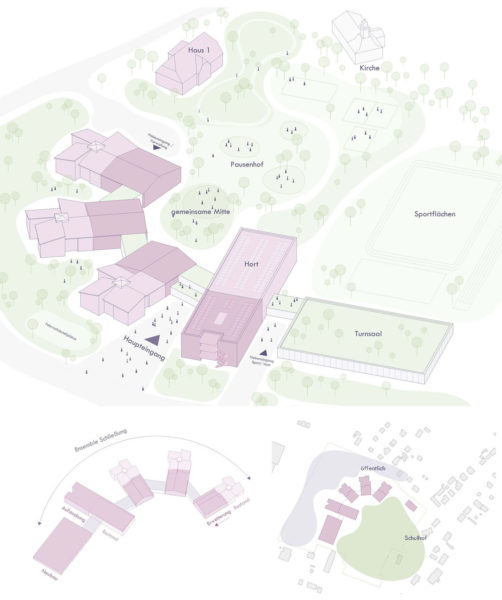
The unique existing building structures are extended intelligently to meet today's requirements for a cluster school. The buildings, only 30 years old, prove open enough in their structure to be extended in a meaningful way.
The existing gym is converted by inserting a new intermediate floor and adding a storey, and will in future house the after-school care centre. The quadruple sports hall, the only new building, completes the school's urban figure. This arrangement creates a clearly public area for the necessary circulation spaces and a protected site for break areas, sport and recreation.
Three stages to the goal
The school's conversion concept takes place in three steps. Once the new quadruple sports hall is completed, the existing sports hall is extended and raised by a storey, including the new plant room for the whole ensemble.
In a second step the primary school can move into its new premises. The new entrance area with canteen around House 3 is converted so that House 5 can be demolished; Houses 2 and 1 are then extended.
In step 3 the upper-school pupils move into the extended conversion. To finalise the outdoor areas, Houses 4 and 6 are now demolished. If desired, Houses III and IV could remain and become part of the outdoor structure, with climbing walls and further usable areas for pupils and teachers.
 There was quite a stir after we, the Zukunft Lebensraum department, published our position paper at the end of February. The media response was enormous and, partly because the topic is so current, reached the country's main news programmes! Internally we agreed to repeat our positions again and again, everywhere, like a mantra. And because it cannot be said often enough, I am doing so here too:
1. Land and space: “Austria is fully built up!”
In principle our government has also recognised that things cannot go on like this, and its government programme already set the goal of reducing daily land take from currently just over 11 ha to 2.5 ha by 2030 – but so far without any effect! We, on the other hand, demand not just a reduction to 2.5 ha but net zero – put simply: new sealing only in exchange for unsealing other land!
2. Climate protection, energy and environment:
“The fossil age is coming to an end!” According to a report by the UN Environment Programme, the construction and buildings sector is responsible for 38% of global greenhouse gas emissions, making it one of the biggest levers in climate policy – and it must be used. Burning oil, coal and gas for energy has to end so that future generations will also find a planet worth living on. Sustainable planning and building play a decisive role not only in reducing greenhouse gas emissions and implementing the energy transition, but also in adapting all living spaces to the now unavoidable effects of the climate crisis.
3. Raw materials, circular economy and life-cycle assessment: “End the throwaway (non-)culture!”
In Austria, demand for mineral raw materials is around 100 million tonnes a year (80% for construction!). This is set against a total waste volume of 77.4 million tonnes (75% from construction!). These figures show why, for a climate-friendly construction industry, it is crucial read more…
Read the full position paper here!
(günter katherl has chaired the department – i.e. the “ministry” – Zukunft Lebensraum in the Federal Chamber since 2023)
Linalotte
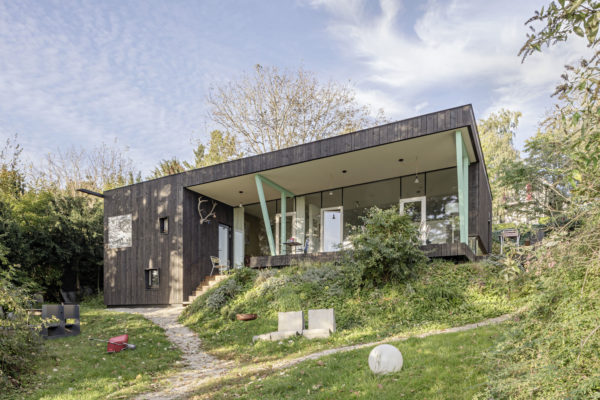
Conversion and extension of the predecessor building Haus Lina with prefabricated timber-frame wall and floor elements filled with recycled insulation; the truck tarpaulin was removed and replaced with a vapour-permeable roofing membrane; a corresponding ventilation layer was added over the entire structure.
The whole building rests on a few screw foundations and allows maximum rainwater infiltration, even underneath the building.
Linalotte won the Häuser award 2025.
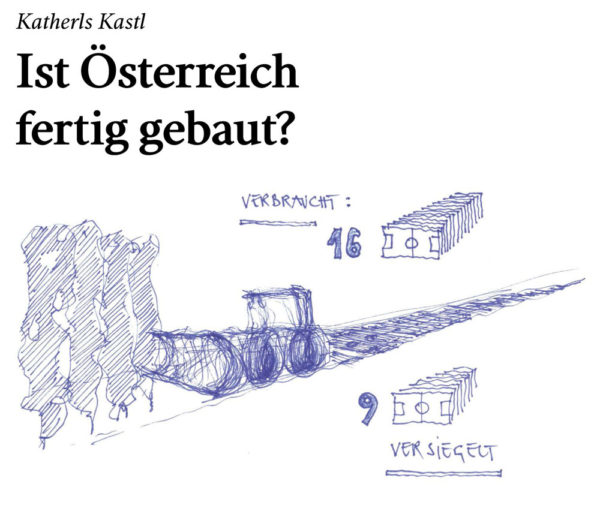 Almost every day our media bring new headlines on land consumption and soil sealing – along with the usual recurring arguments: are we world champions or only European champions? What exactly is land consumption? Strictly speaking we are talking about “land take”: the loss of biologically productive soil through development for settlement and transport, but also for intensive recreational use, landfills, extraction sites, power plants and similar intensive uses. A newly created park is therefore just as much land take as a new industrial plant. What really matters is what happens to the land that is taken. Roughly speaking, about half of it is also sealed, i.e. covered with a layer impermeable to water and air, so that soil life dies. But how much land is there in our country in total? The land available to us is called “permanent settlement area” – the area that remains after deducting forest, mountains and water bodies, available for settlement, infrastructure and agriculture. Because of the high alpine share of our country, the permanent settlement area makes up just under 39% of the total area, or around 32,500 km², with the percentage varying greatly from province to province (Tyrol: 12.5%, Vienna: 77.3%). To date, around 18% of Austria's permanent settlement area has been taken – almost a fifth! read more…
(günter katherl has chaired the department – i.e. the “ministry” – Zukunft Lebensraum in the Federal Chamber since 2023)
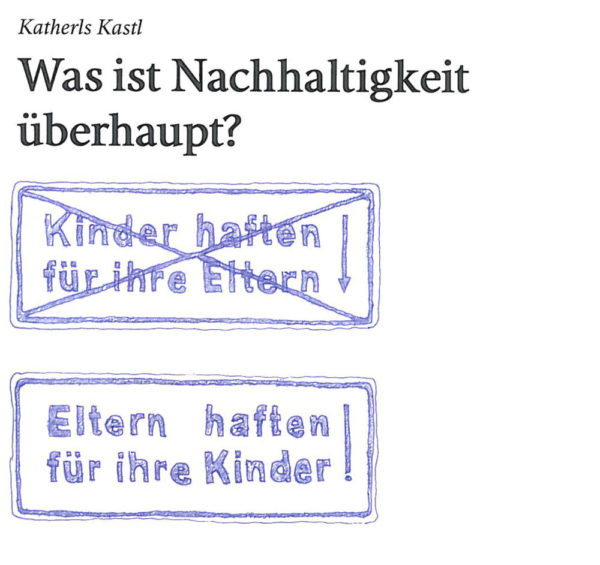 In the last issue of “derPlan” we launched a “call for papers” for our regional chamber, to find the sustainability experts among us. In the meantime the federal sustainability department “Zukunft Lebensraum” has also been constituted and elected me as its chair. An honorary but above all a responsible task in these exciting times. Now the job is not only to find the professionals among us and get them to work together, but also, together with our zt: akademie, to launch a kind of education offensive that makes sure none of our colleagues is left behind as we move forward and try to make ourselves fit for the future. We will probably not manage to convince every single one of us of the need for further training, but perhaps that is not even necessary, because not everyone has to be an absolute top performer in sustainability. On the other hand, even if someone among us works in a niche where there seems to be no further need for information, it cannot hurt to at least
know the basics of the relevant laws and regulations, or indeed the principles behind them.
And perhaps we can take care of that right here?! So what does
sustainability actually mean? Originally the word meant a “long-lasting effect”. Later came the meaning of “long-term compatibility read more…
(günter katherl has chaired the department – i.e. the “ministry” – Zukunft Lebensraum in the Federal Chamber since 2023)
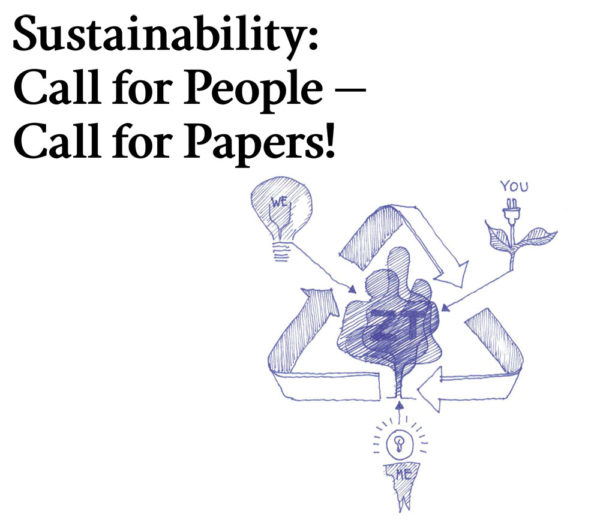 Our country, Europe, the whole world is (hopefully!) preparing for a future defined by ever more new buzzwords, headlines and regulations such as the European Green Deal, the EU taxonomy, the strategy for a climate-neutral Europe, the Energy Performance of Buildings Directive (EPBD), the Sustainable Development Goals (SDGs), the Austrian circular economy strategy and many more. All titles that influence our work every day. But are we all really clear about what is coming our way? Will we become passengers on a journey whose direction is set by others? Are we even still taking part in this journey, or are we only watching it all from a distance? Are we chartered engineers and architects still needed for this at all? Or is this perhaps exactly our big opportunity? Can our expertise help to shape the future of this world of ours in the way it needs? Will we become pioneers in all the subject areas that have always shaped our daily work, and lead the way so that the future may be a better one? How does the future get better? By the best in each field joining forces – not just to comply with some laws, but to build a pool of experts to shape the future! And who are these best, if not us? Of course us – all of us
together! But we must not rely solely on our professional body to keep sorting everything out for us! No, now it takes all of us, every single one of us! We are a small profession, but it is surely no coincidence that we have been given very special rights and duties – let us finally make use of them! read more…
(günter katherl has chaired the department – i.e. the “ministry” – Zukunft Lebensraum in the Federal Chamber since 2023)
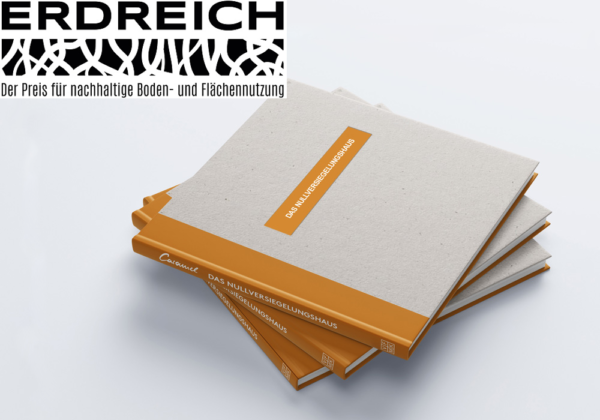 “Das Nullversiegelungshaus” (the zero-sealing house) – (winner of the Erdreich prize!)
Since the dawn of humanity, people have intervened in nature and its surfaces simply by existing – whether through clearing forests, planting, or building houses and eventually cities. Today, too, a vast amount of land is sealed every day in our country, withdrawn forever from permanent biological production.
And no, we will not suddenly stop maximising our profits and chasing the eternal premise of progress through growth!
And no, we will not stop building either!
But is there perhaps a way to build without increasing the degree of sealing? Or is it even conceivable that we could erect buildings that actually counteract sealing? In the spirit of: every additional house reduces total sealing by a certain value x?
In Caramel's new book, a research project analyses and evaluates existing buildings for their degree of sealing, using an existing tool and a newly developed one. The aim of this empirical work is to present prototypes that are not just sealing-neutral but sealing-reducing – in other words, to develop houses that lower the sealing factor of their surroundings simply by existing:
With every one of these new houses, our environment gets a little bit better!
So far there is one decisive factor for counteracting sealing: the greening factor!
In the course of the work it quickly becomes clear that another factor is important: the so-called lift factor, i.e. raising the building off the ground.
However – and somewhat surprisingly – a third factor is discovered at the end…
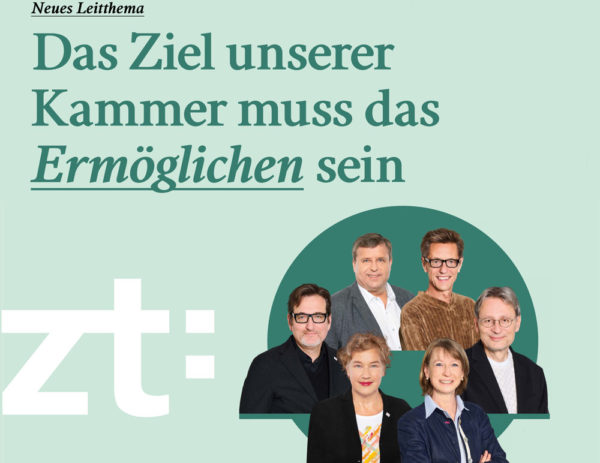 Climate change, digitalisation, shortage of skilled workers … Like hardly any other sector, chartered engineers and architects are going through a process of transformation. In episode 12 of the zt: podcast “JETzt:”, members of the newly elected presidium talk
about designing, planning and building, the EU taxonomy and sustainability, and about their plans and projects for the current term of office. Climate change, digitalisation, shortage of skilled workers … Like hardly any other sector, chartered engineers and architects are going through a process of transformation. In episode 12 of the zt: podcast “JETzt:”, members of the newly elected presidium talk about designing, planning and building, the EU taxonomy and sustainability, and about their plans and projects for the current term of office.
Eva-Maria Rauber-Cattarozzi:
Welcome to the 12th podcast of the Chamber of Chartered Engineers and Architects for Vienna, Lower Austria and Burgenland, titled
“JETzt: Unsere Aufgabe ist das Ermöglichen” (Our task is to enable). After the chamber elections in May, this autumn we are starting the 2022–2026 term of office, and today we want to talk about the priorities the newly elected presidium wants to set in this term. I am pleased to welcome President Bernhard Sommer, Vice-President Peter Bauer, the chair of the civil engineers' section Michaela Ragoßnig-Angst, and the deputy chair of the architects' section Günter Katherl.
Let me start straight away with the question: “JETzt: Unsere Aufgabe ist das Ermöglichen” – you chose this title; what do you mean by it?
Bernhard Sommer:
“Enabling” is to be the guiding theme of the Chamber during our term of office… read more here…
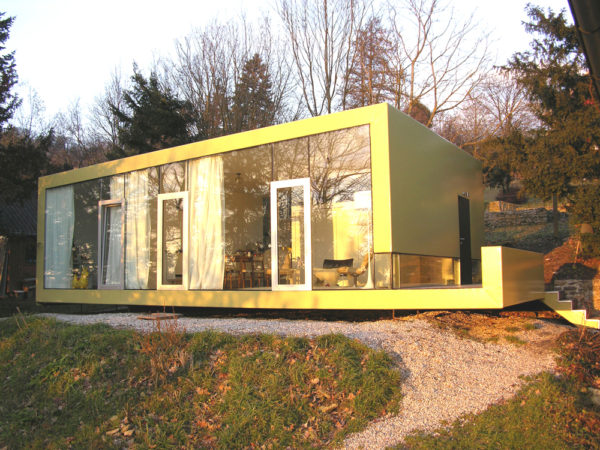
Haus Lina
The house without sealing!
The predecessor of Linalotte was deliberately designed “not for eternity”: depending on future life circumstances it could easily be removed again, or extended. In 2020 Lina was extended to become Linalotte .
Construction: timber / steel / chipboard
The whole building rests on a few screw foundations and allows maximum rainwater infiltration, even underneath the building.